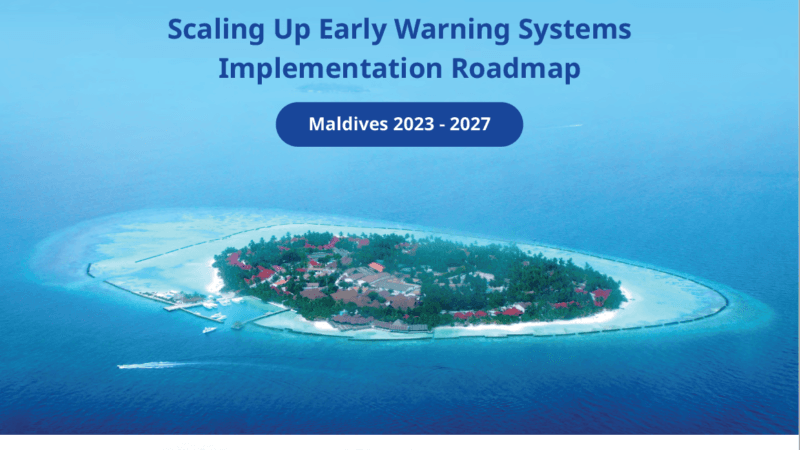
Early Warnings for All (EW4All) is a special initiative of the UN Secretary General, which aims to spearhead action to ensure every person on Earth is protected by early warning systems by 2027. Under the umbrella of EW4All, Maldives aims to scale up prior efforts and strengthen national early warning systems. The Sustainable Development Goals (SDGs) and the Sendai Framework for Disaster Risk Reduction 2015-2030 identify strengthened early warning systems as a critical component of building the resilience to disasters and crises and, by extension, contributing to sustainable development.
The Four Pillars
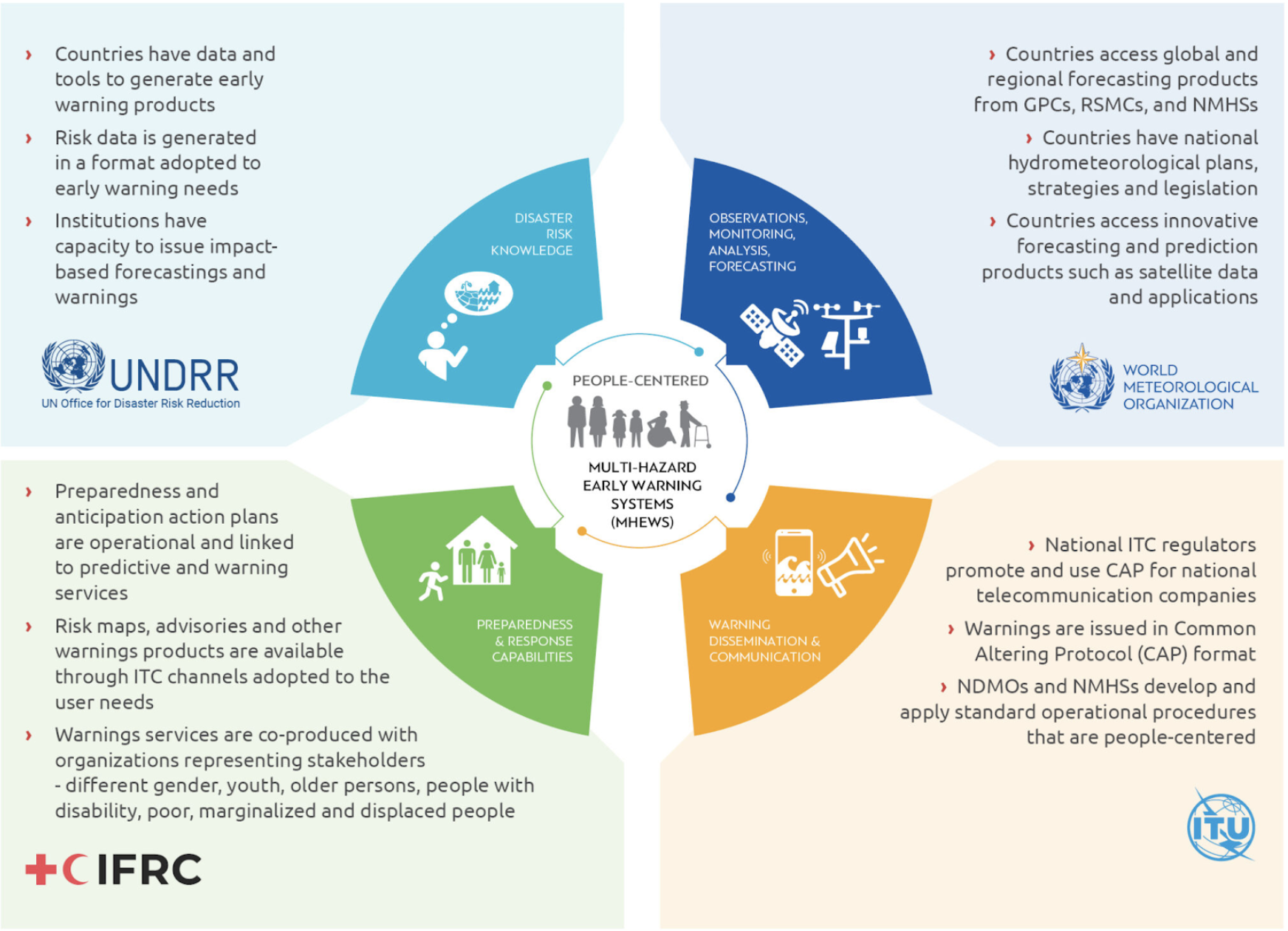
Early Warnings for All is built on four pillars that are the cornerstones of the initiative and of effective multi-hazard early warning.
Disaster risk knowledge and management (led by UNDRR)
Detection, observation, monitoring, analysis, and forecasting (led by WMO)
Warning dissemination and communication (led by ITU)
Preparedness and response capabilities (led by IFRC)
Maldives Early Warning Systems Implementation Roadmap (2023–2027)
Maldives a nation among thirty countries for rapid focus, became the first country in Asia and the first Small Island Developing State (SIDS) to develop strategy on the initiative and the first nation to adopt and publish the national roadmap for Early Warnings for All initiative. The roadmap was developed with the support of United Nations Resident Coordinator’s Office, along with the pillar leads of Maldives Meteorological Service, National Disaster Management Authority, Maldivian Red Crescent, and the National Centre for Information Technology.
The Roadmap outlines how key institutions such as the National Disaster Management Authority (NDMA), Maldives Meteorological Service (MMS), Ministry of Homeland Security and Technology (MoHST), and Maldivian Red Crescent (MRC) will work collaboratively to deliver a people-centred, end-to-end early warning system. Through the Roadmap, the Maldives aim to create a more coordinated national system where government authorities, agencies, councils, telecom operators, and community organisations work together to protect lives and livelihoods. The document also links early warning to wider national priorities, including climate adaptation, resilience building, and decentralised governance.
Why It Matters
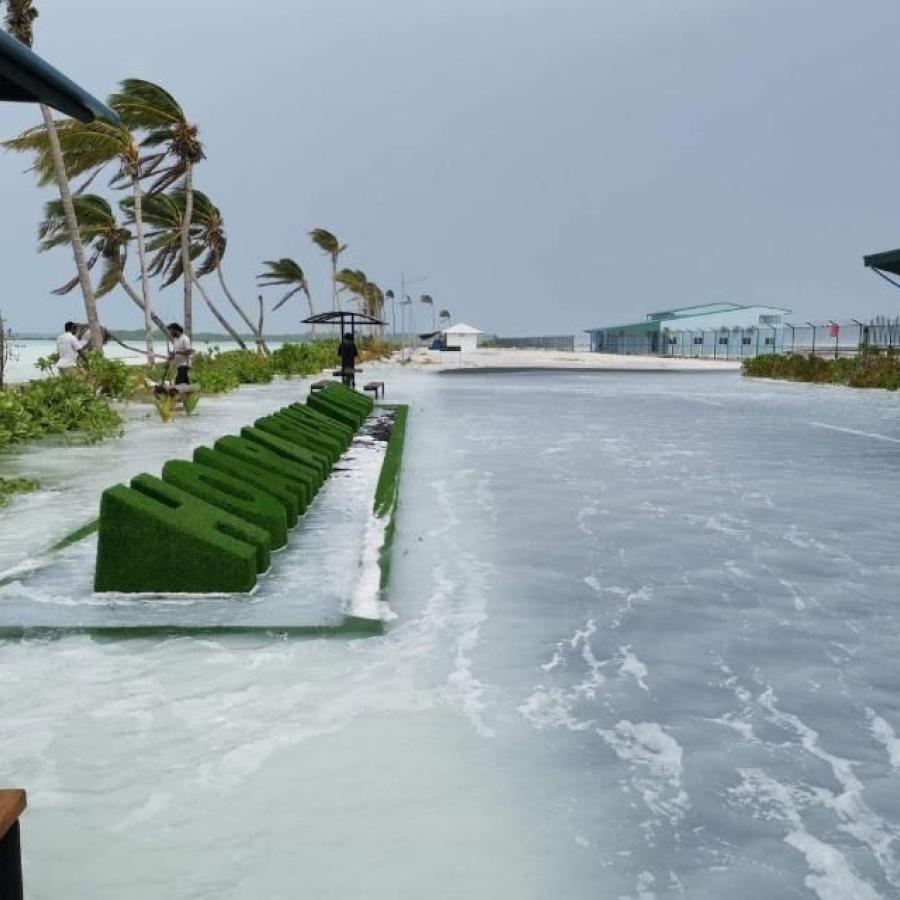
As the world’s lowest-lying nation, the Maldives faces significant exposure to climate-related hazards such as sea-level rise, storm surges, coastal flooding, heavy rainfall, and heatwaves. The Roadmap responds to these increasing risks by consolidating national mandates and strengthening the role of key agencies responsible for forecasting, public communication, and emergency preparedness.
Overview of the EW4All Roadmap Development and Institutional Roles
How the Roadmap Was Developed
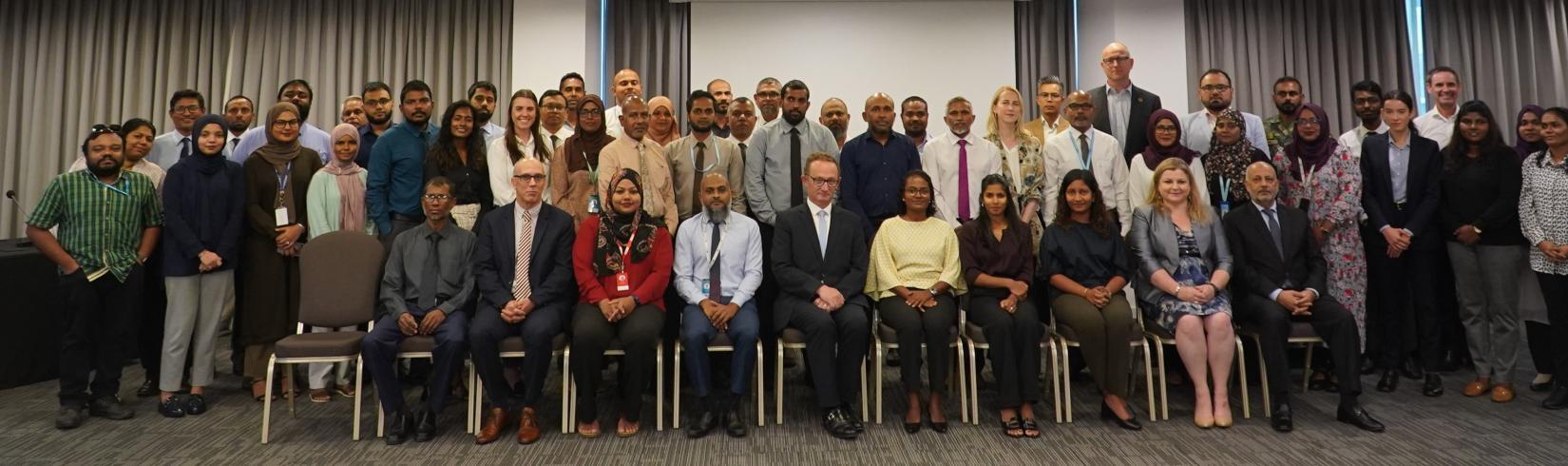
The Early Warnings for All (EW4All) initiative in the Maldives began with the participation of key government agencies and private-sector partners. A national consultation held over two days brought these institutions together to review existing early warning capacities and identify gaps across the four EW4All pillars.
A comprehensive gap analysis, designed by the global pillar leads, guided this process. Stakeholders reviewed a structured set of questions to determine what was missing or underdeveloped in the current system. The analysis was validated during the consultation and further refined through online exchanges and in-person discussions over several months.
The resulting findings formed the basis of the Early Warning Systems Implementation Roadmap. Each activity in the Roadmap responds directly to an identified gap and has been shaped with inputs from designated staff within the institutions leading each pillar. Budget estimates reflect past national experience and research on activities not previously implemented in the Maldives. While full funding sources are yet to be secured, the Roadmap serves as a consolidated reference to guide resource mobilisation.
National Pillar Leads and Their Global Connections
The EW4All initiative in the Maldives is implemented through four nationally designated pillar leads, each connected to global institutions responsible for providing scientific standards, technical guidance, and best practices.
Pillar 1: Disaster Risk Knowledge
National Disaster Management Authority (NDMA)
NDMA leads national risk knowledge, overseeing hazard assessments, digital mapping, and loss databases. Through EW4All, NDMA works closely with UNDRR, UNDP, and UNESCAP, ensuring Maldives’ risk data and methodologies align with global disaster risk reduction standards and the Sendai Framework.
Pillar 2: Detection, Observation, Monitoring, Analysis and Forecasting of Hazards
Maldives Meteorological Service (MMS)
MMS leads hazard detection, observation, and forecasting. Its role is linked to WMO global meteorological standards, RIMES regional modelling support, UNESCAP forecasting capacity programmes, and IOC-UNESCO tsunami readiness systems. These partnerships provide the Maldives with world-class forecasting data and scientific support.
Pillar 3: Warning Dissemination and Communication
Ministry of Homeland Security and Technology (MoHST)
MoHST is responsible for warning dissemination and communication, including CAP integration, multi-channel alerting, and digital infrastructure. Its work aligns with ITU telecommunications standards, the WMO Global Alert Hub, and global EW4All partners to ensure warnings are accessible, multilingual, and technically interoperable.
Pillar 4: Preparedness and Response
Maldivian Red Crescent (MRC)
MRC leads preparedness and community response, supported by the global network of the International Federation of Red Cross and Red Crescent Societies (IFRC). It integrates global humanitarian practice, early action approaches, and community resilience standards into local programmes, ensuring that preparedness reaches all population groups.
Building resilience for generations to come
The Maldives’ Early Warning Systems Implementation Roadmap reflects the Government’s commitment to protecting lives in the Maldives, one of the world’s most climate-vulnerable island nation while aligning with global level initiatives Through sustained collaboration between national agencies, UN partners, the scientific community, the humanitarian sector, and local communities, the Maldives is aims to transform early warning from fragmented practice into a unified system, one capable of safeguarding its islands today while building resilience for generations to come.
Related Resources
Global Early Warnings for All Website
