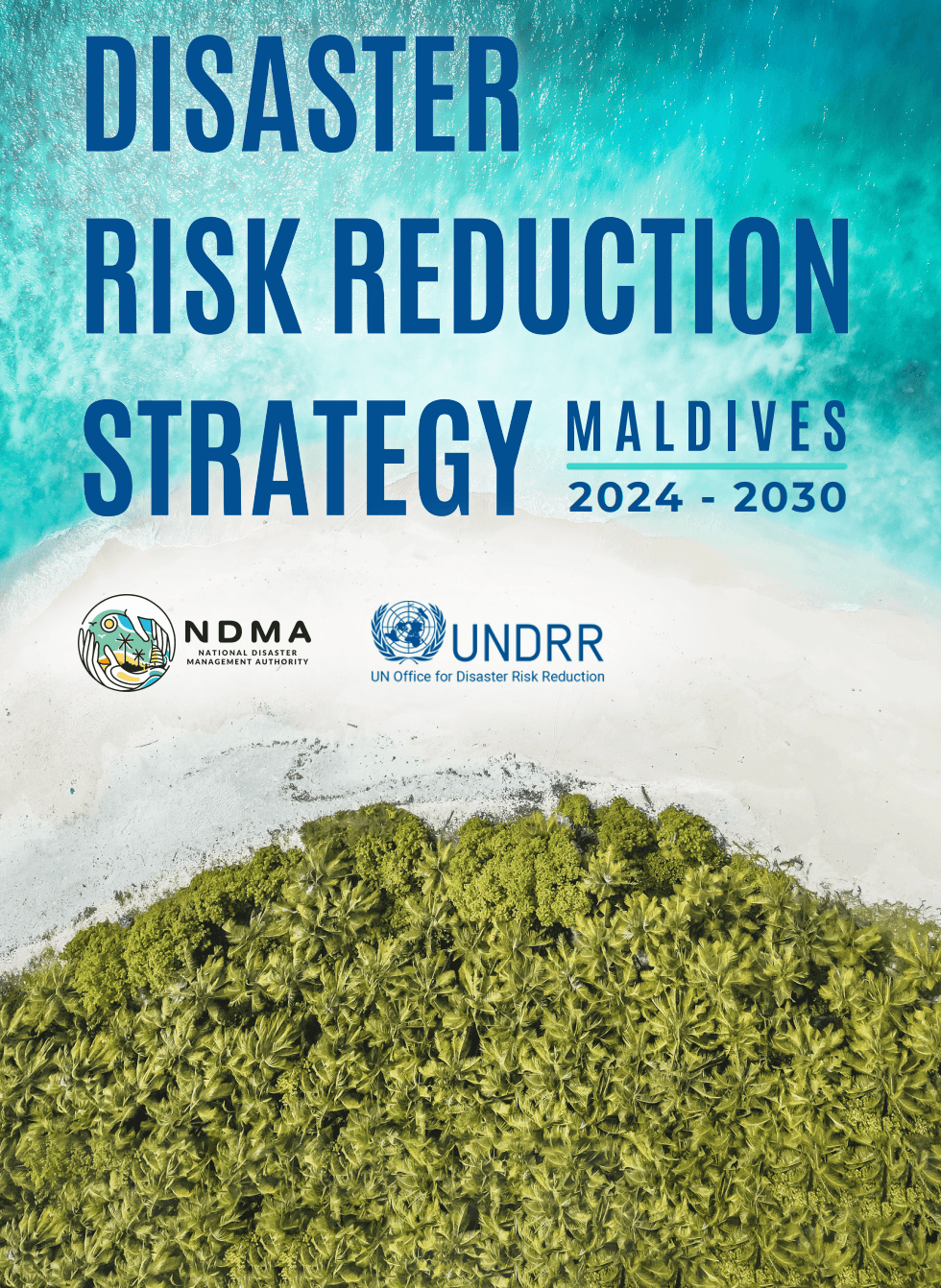
In 2024, twenty years after the Indian Ocean tsunami changed the country forever - President Dr Mohamed Muizzu, endorsed the Maldives Disaster Risk Reduction Strategy 2024–2030. It is the country's first comprehensive six-year roadmap for protecting its people, environment, and economy from the disasters of the future.
A strategy shaped by experience
The strategy did not emerge in isolation. It was built on the foundations laid after the 2004 tsunami. The establishment of the National Disaster Management Centre, the passage of the Disaster Management Act in 2015, and the creation of the National Disaster Management Authority (NDMA) as the lead agency for coordinating disaster management nationally.
It was also built on lessons from twenty years of growing climate exposure. Coastal flooding, intensifying monsoons, recurrent fires in urban areas, and the increasing frequency of swell events have all shown that the hazards facing the Maldives are not occasional events, they are part of the country's daily reality.
The strategy aligns directly with the Sendai Framework for Disaster Risk Reduction (2015–2030), the global framework adopted by the United Nations to guide countries in reducing disaster risk through this decade. By formulating its own national strategy, the Maldives has joined a relatively small group of countries that have done so comprehensively.
It also reinforces the country's global advocacy on the unique vulnerabilities faced by Small Island Developing States (SIDS) in the face of climate change.
What the strategy aims to do
The objectives of the strategy are clear:
To protect the natural and built environment of the Maldives — its islands, reefs, mangroves, infrastructure, and homes — from climate hazards and other disasters.
To safeguard the lives, homes, and assets of Maldivian citizens.
To achieve disaster preparedness, resilient communities, and sustainable development in line with the country's broader goals.
To facilitate mitigation efforts and create opportunities for human resource development in the disaster management sector.
The implementation period between 2024 to 2030 allows the strategy to align with major international frameworks (Sendai, the Paris Agreement, the Sustainable Development Goals) while giving the country enough time to meaningfully shift how disaster risk is managed at every level, from national to sub-national, and community.
The seven priorities at the heart of the strategy
The strategy is built around seven key priorities, each one targeting a different dimension of how the country prepares for, responds to, and recovers from hazards.
Why this matters
Disaster risk reduction is not the work of one agency, one strategy, or one moment. It is a long, layered, national effort that depends on government, communities, civil society, and individuals working together over years. The Maldives Disaster Risk Reduction Strategy 2024–2030 is the country's most comprehensive attempt yet to bring all of this together and align how the country detects hazards, communicates risk, builds infrastructure, protects nature, and supports communities. It is a strategy that recognizes something fundamental that resilience is built, not inherited.
Read the full strategy
The Maldives Disaster Risk Reduction Strategy 2024–2030 was endorsed by the National Disaster Management Council on 26 December 2024, and is published by the National Disaster Management Authority. The full document outlines detailed action plans, indicators, and implementation pathways for each of the seven priorities.