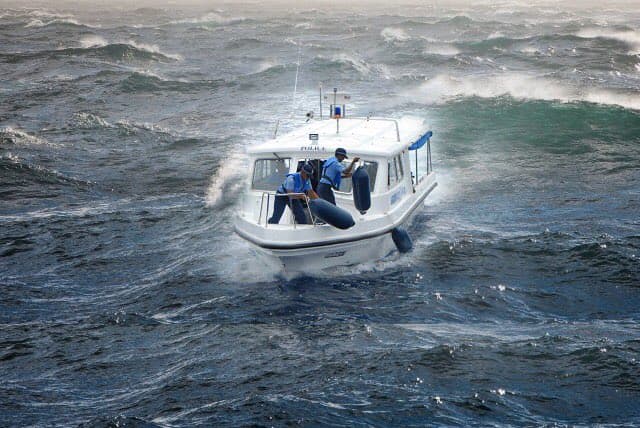
When you spend extended periods of time at sea, whether you're fishing the open ocean, crewing a supply dhoni between atolls, or running a ferry route you are at the mercy of changing weather. Storms build. Winds pick up. The sea that was calm in the morning turns rough by afternoon.
That's not a reason to fear the sea. It's a reason to respect it. The boats and crews that come home safely aren't the ones that never face bad conditions. They're the ones who watched for them, prepared for them, and knew what to do when they came.
This page brings together the practical steps every traveler on the water can take in the Maldives from fishers, seafarers, and travellers alike to stay safe before, during, and after a trip.
The hazards we face at sea
Three hazards affect almost every trip on Maldivian waters. Knowing what they look like, and how they show up in the forecast, is the first step.
All three are tracked and forecast by the Maldives Meteorological Service. Their warnings are colour-coded so you can see at a glance how serious the situation is.
For fishers and seafarers
If you fish, crew a supply boat, or work on the water, you're not just keeping yourself safe, you're responsible for the people with you and the boat under your feet. Five things matter most.
Monitor weather forecasts before heading out to sea
Check the Maldives Meteorological Service forecast every time, even for routes you've run a hundred times.
Pay attention to wind, swell, and storm warnings.
If a yellow or red advisory is in effect for your area, avoid sea travel and find shelter.
Ensure all essential communication and emergency gear is in working condition at all times
Before every trip, run through this list before you cast off:
A radio you haven't tested is a radio you can't count on. The same is true of every other piece of safety gear on the boat.
Continue monitoring the weather forecast while at sea
The forecast you read at the harbour may not be the forecast at noon. Conditions evolve. If you have access to a radio, phone signal, or satellite communications, keep checking.
Everyone on board should know how to call for help, not just the skipper. Key Contact Numbers include :-
MNDF Coast Guard - 191
Marine Police -
National Disaster Management Authority — 115
Maldives Meteorological Service — 3317171 (24-hour weather hotline)
Save these in every crew member's phone. Write them on a card kept somewhere dry on the boat. The day you need them is not the day to be looking them up.
For travelers
If you're not crew but you travel by sea to work, to visit family, to commute between islands - your safety isn't only in the captain's hands. A few habits before and during your trip make a real difference.
Plan your travel only after careful consideration of:
The weather forecast. Check Maldives Meteorological Service before you leave. If conditions look bad, delay if you can. Most trips can wait, bad outcomes can't be undone.
Announcements from relevant authorities. Maldives Meteorological Service, MNDF Coast Guard, and the National Disaster Management Authority all issue public advisories when sea travel becomes risky. Follow their channels and trust their guidance.
When you board:
Numbers worth saving
Save these in your phone. Keep them written on a card on the boat. Make sure every crew member and family member knows them.
Hushiyaaru - Fishers & Seafarers Edition
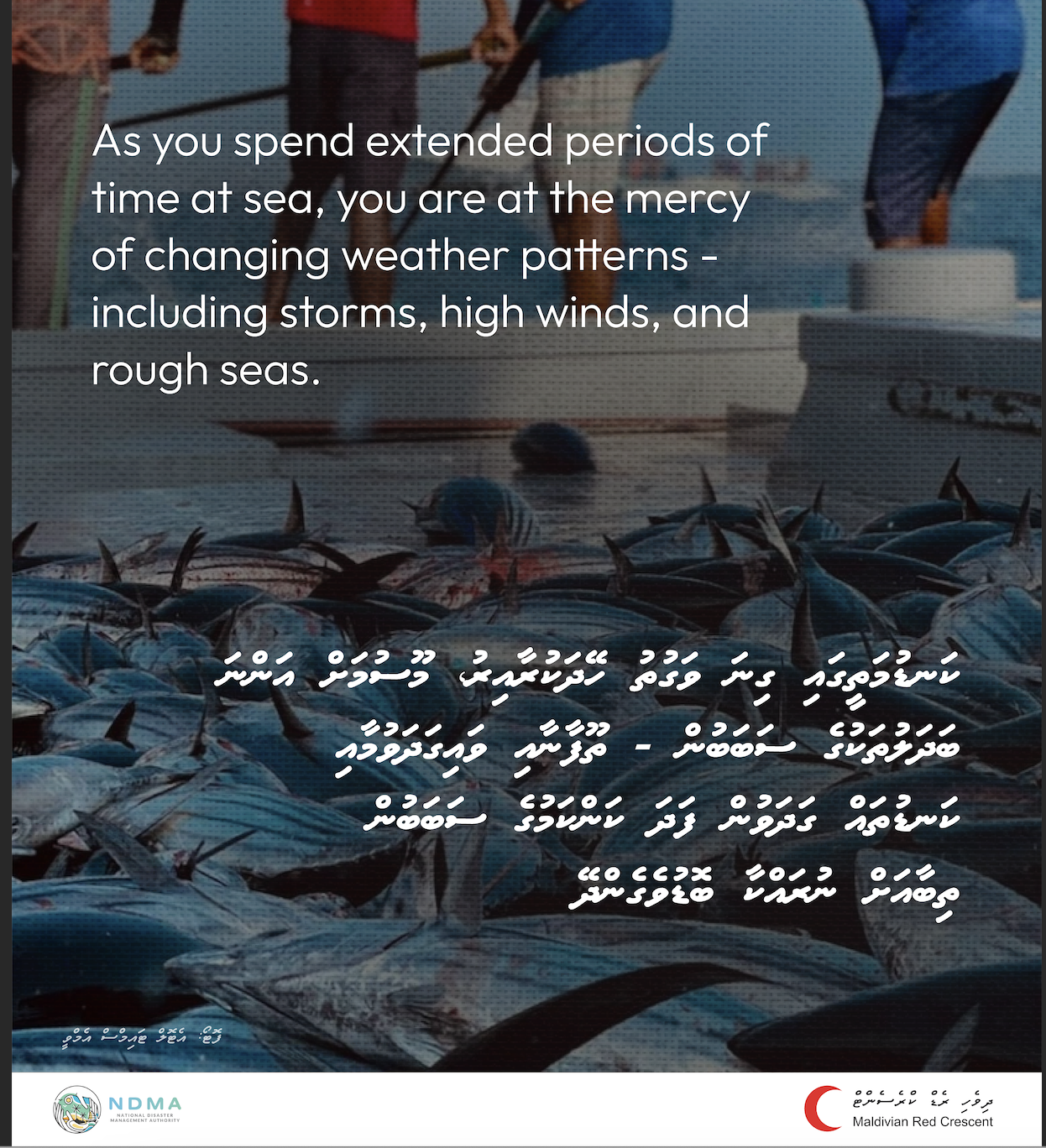
As you spend extended period of time at sea, you are at the mercy of changing weather patters - including storms, high winds and rough seas
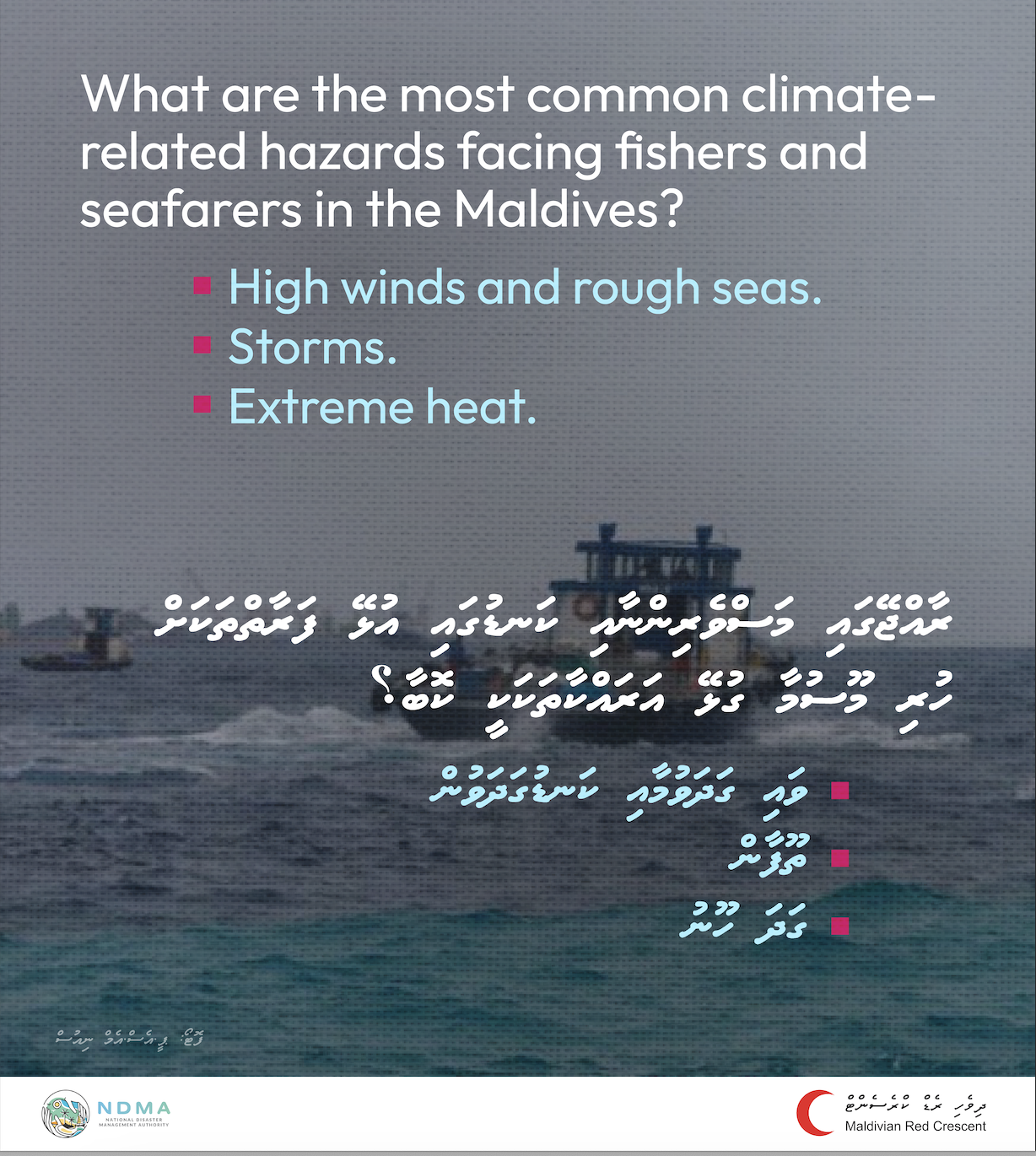
The most common climate related hazrd facing fishers and seafarers in the Maldives are :- High Winds & Rough seas, Storms and Extreme Heat
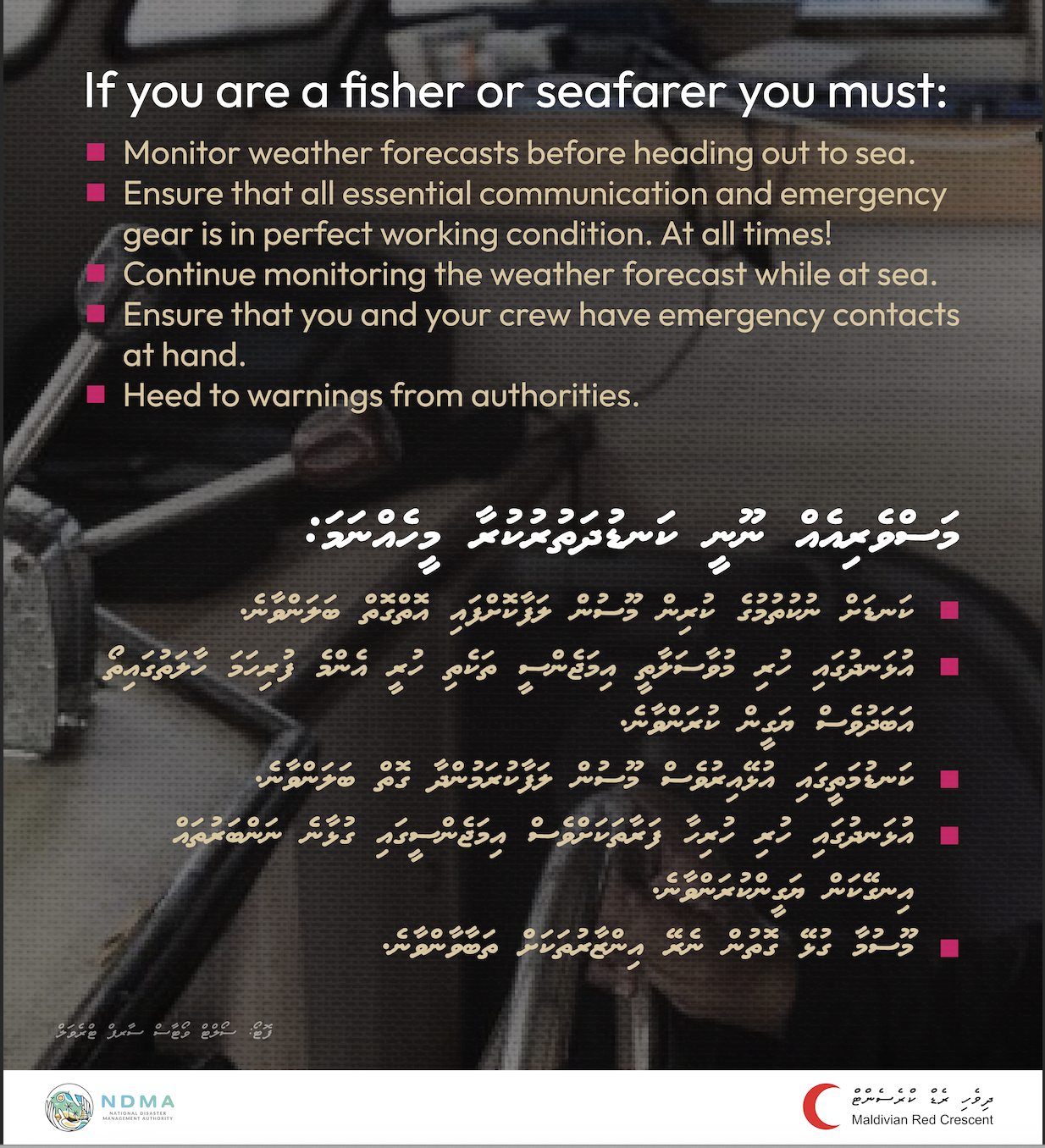
Read the steps if yo uare a fisher or seafarer
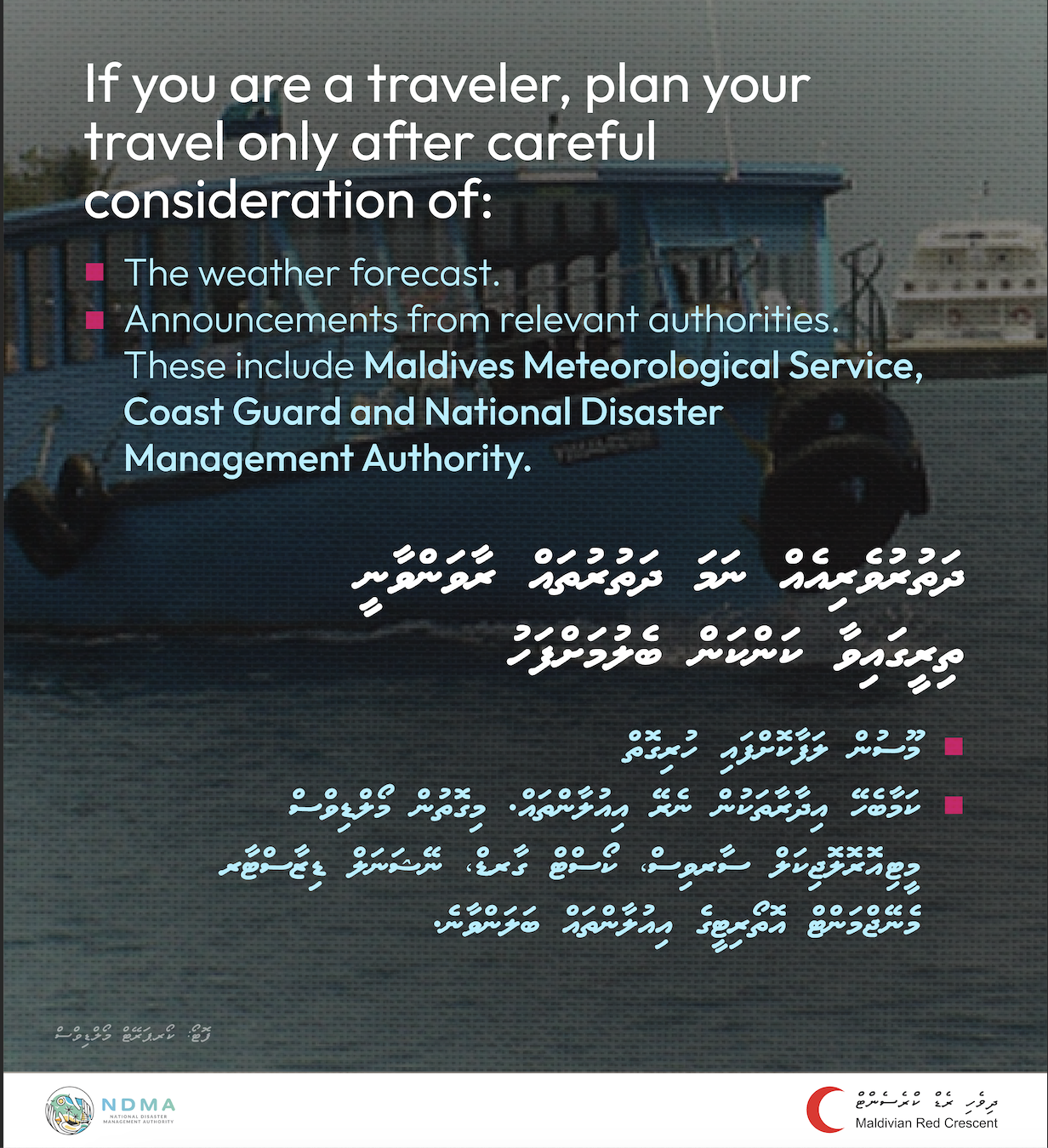
If you are traveler, plan your travel after careful consideration