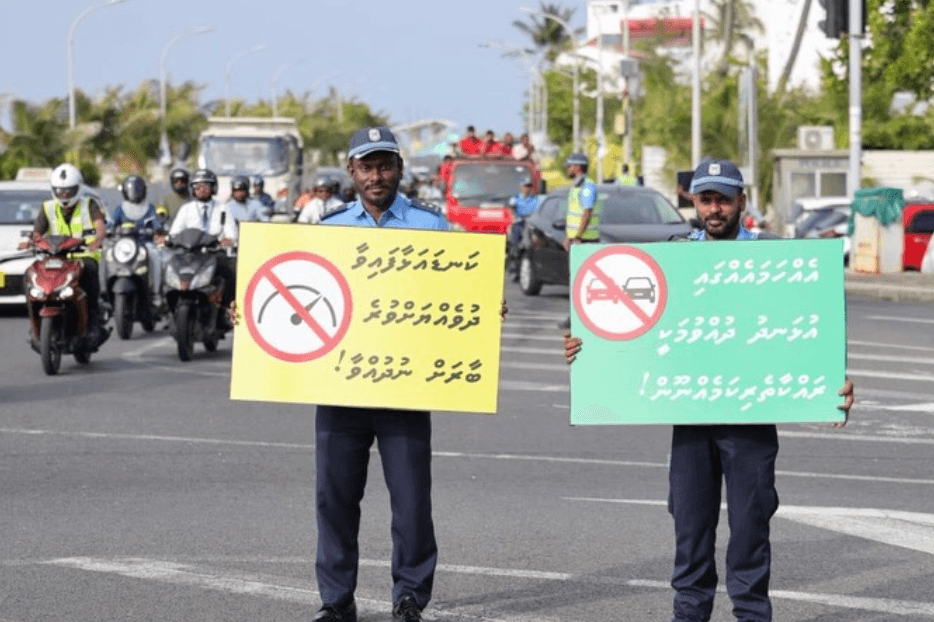
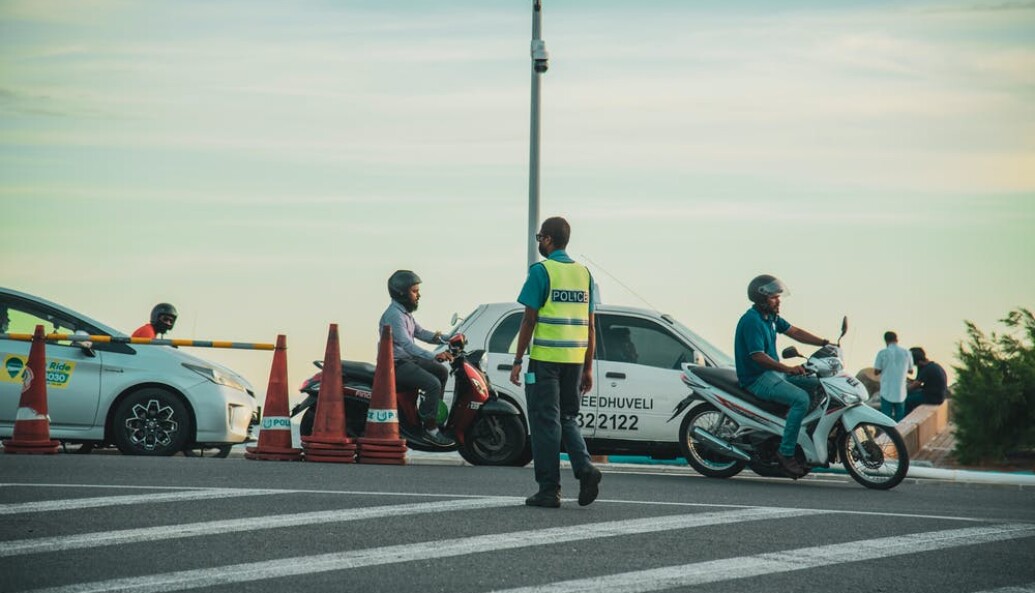
Road safety in the Maldives starts with awareness of speed, signals, vehicles, and the people around you. A brief guide to staying safe on the road, drawn from Maldives Traffic Police guidance.
Why road awareness matters
Most road incidents in the Maldives are not caused by extreme circumstances. They are caused by small lapses such as a phone glanced at, a signal missed, a corner taken too fast, a moment of impatience. The Maldives Police Services Traffic Police's approach to safety is built around three things: awareness, education, and enforcement. The first two are where every road user can play a part.
Driving safely is not a private decision. Every time you turn a key or press an accelerator, your choices affect everyone else on the road - pedestrians, fellow drivers, children, the elderly. A safe road is one where everyone understands that.
Road safety begins with the basics and they apply on every street, every island, every day.
✓
Follow traffic signals and signage at all times - They exist to keep traffic moving safely, not as suggestions.
Keep a safe distance between vehicles - A short gap means short reaction time. Maintaining distance gives you the moments you need to respond if someone ahead brakes suddenly.
Avoid overtaking on narrow streets or blind turns - What you cannot see can hurt you. If you can't be sure the road ahead is clear, wait.
Use indicators early - Indicators are how you communicate with other drivers and pedestrians. Use them well before turning, not as you turn.
Traffic signals and right of way
Signal compliance is one of the most important and most overlooked areas of road safety.
Stop completely at red lights and stop signs
Yellow means prepare to stop, not accelerate. Treat it as a warning, not an opportunity.
Proceed only when the green light is clearly on. Don't anticipate the change; let the signal guide you.
Give way to pedestrians before turning - Pedestrians have right of way at crossings and junctions
Parking responsibly
Parking is more than a personal convenience. Where and how you park affects how safe and accessible the road is for everyone else.
✓
Park only in authorized or marked parking areas.
Do not obstruct driveways, pedestrian crossings, or bus stops.
Avoid parking in front of emergency exits or fire access points. Even a few minutes of obstruction can delay emergency vehicles when seconds matter.
A clear road is a safer road. Improper parking creates congestion, blocks visibility, and forces pedestrians and other vehicles into more dangerous spaces.
Vehicle safety
A well-maintained vehicle is a safer vehicle. Regular checks prevent breakdowns and keep your vehicle road-worthy.
Check tyres, brakes, and lights regularly
Worn tyres lose grip, especially in the rain. Brakes need attention before they fail, not after. Lights are how you see and how you're seen.
Ensure mirrors and wipers function correctly
Mirrors give you awareness of what's around you. Wipers can be the difference between safe and dangerous driving in a sudden downpour.
Routine vehicle maintenance
One of the most underrated forms of road safety. Don't wait for something to break - check, service, and replace as part of regular ownership.
Driver etiquette
How you drive matters as much as whether you follow the rules.
Avoid using mobile phones while driving - Even a quick glance at a screen takes your attention off the road for several metres at full speed.
Stay attentive and avoid distractions - Eating, adjusting devices, or engaging in heated conversations all reduce the attention you have for the road.
✓
Show courtesy and patience to all road users - Other drivers, scooter riders, cyclists, and pedestrians are not in your way, they are sharing the road with you. Driving with patience reduces stress, conflict, and accidents.
Road rage and impatience cause more incidents than mechanical failure ever will. The most respected drivers are the calm ones.
Speed and conditions
Speed limits are not arbitrary. They are calibrated for the road, the environment, and the people likely to be on or near it.
✓
Always drive within posted speed limits
Slow down in school and residential areas - Children are unpredictable and may not see you in time. The lower your speed, the more time everyone has to respond.
Reduce speed during rain or poor visibility - Wet roads mean longer braking distances and reduced traction. Poor visibility means you see hazards later.
✓
Enter your text here...
Remember arriving safely is more important than arriving fast. No journey is so urgent that it justifies risking your life or someone else's.
For pedestrians, parents, and passengers
Road safety is not only for drivers. Anyone using or sharing the road can play a role in keeping it safer.
Pedestrians: Use designated crossings where available. Look both ways even on quiet streets. Avoid walking distracted by your phone.
Parents and guardians: Teach children road awareness from a young age. Walk with them to school, point out signs, explain why we wait, why we look, why we stop.
Passengers: Wear a seatbelt where one is fitted. Don't distract the driver. If the driver is unsafe, speeding, using a phone, driving recklessly — speak up.
A community where everyone takes responsibility for road safety is a community that protects its most vulnerable members.