Most home fires in the Maldives are preventable. Learn simple, practical steps to keep your kitchen, electrics, and gas cylinders safe and what to do if a fire breaks out.
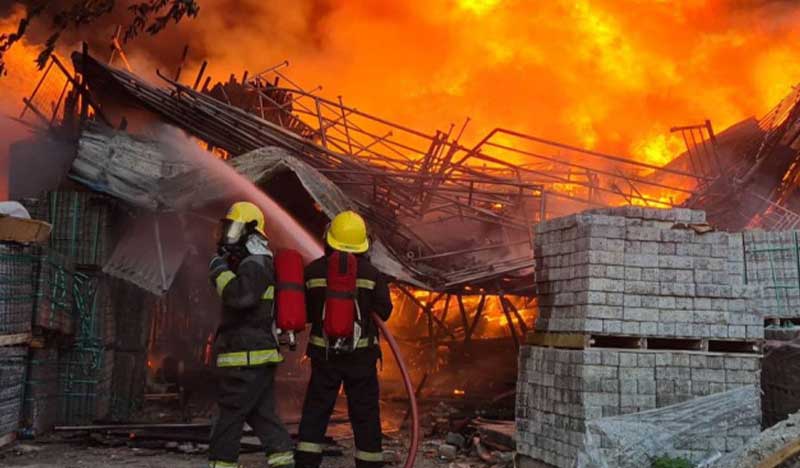
Between 2018 and 2023, MNDF Fire and Rescue Service responded to 174 reported fire incidents across the Maldives. Most happened inside homes. In dense neighborhoods like Malé, where buildings sit close together and stairwells are narrow, a fire on one floor can quickly affect many families.
The good news is that most home fires are preventable.
They start in places we use every day, the kitchen, the electrical socket, the gas cylinder behind the stove. Knowing where the risks live, and making a few small habits part of daily life, is the difference between a near-miss and a tragedy.A fire needs only three things to start: oxygen, fuel, and heat. T
Take one of them away, and the fire goes out. Almost every safety habit in this article is a version of that idea.
Where home fires start
In the kitchen
The kitchen is where most home fires begin. Oil flares, pots boil over, a tea towel brushes against an open flame.
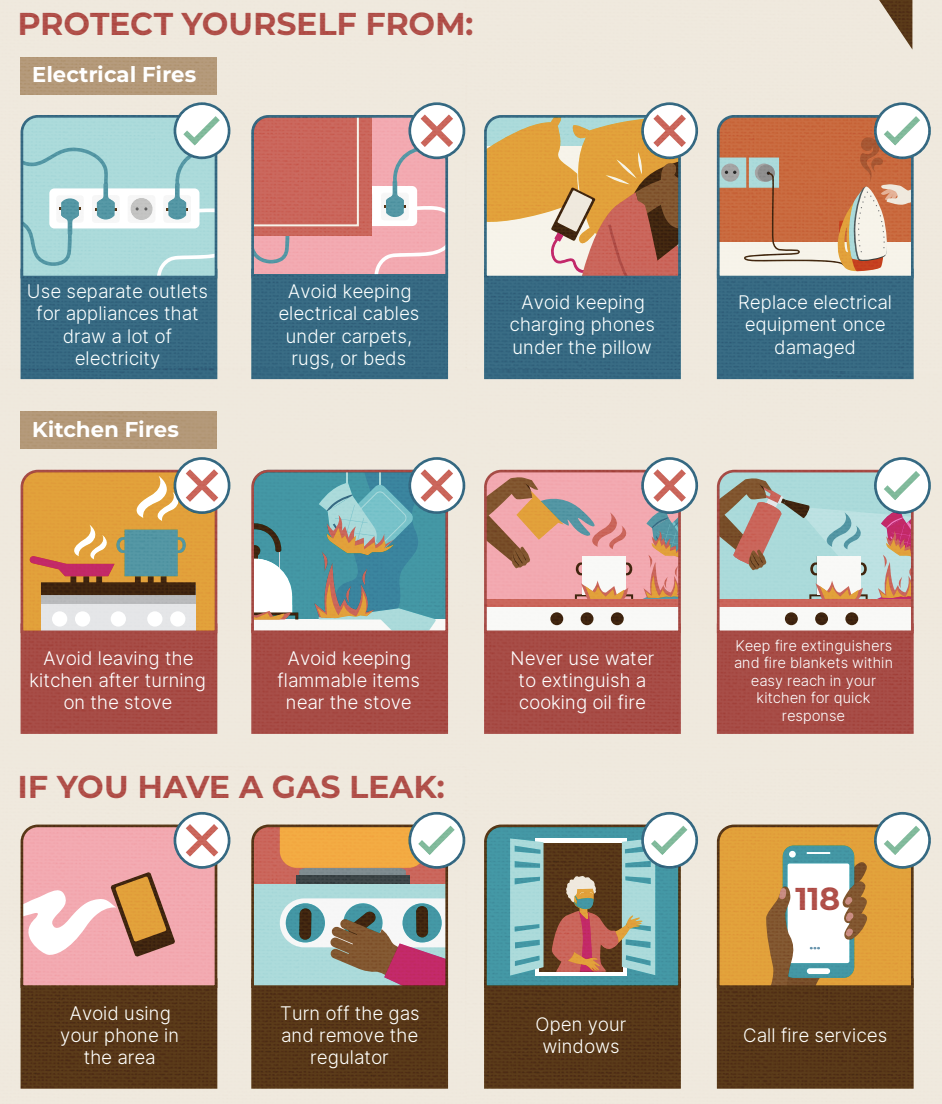
Don't leave a stove unattended once it's lit. If you have to step away, turn it off first.
Keep flammable things like cloth, paper, plastic, curtains away from the flame.
Never use water on a cooking oil fire. It will explode upward and spread the flames. Cover the pan with a lid or a fire blanket, and turn off the heat.
If your clothes catch fire while cooking, stop, drop, and roll. Drop to the ground and roll to smother the flames. Don't run.
With electricity
Older buildings, multiple appliances on one socket, and Maldivian humidity are a difficult combination.
Don't overload sockets. Kettles, irons, microwaves, ACs — high-draw appliances should each have their own outlet.
Keep cables visible. Don't run wires under carpets, rugs, mattresses, or behind furniture, where heat can build up.
Don't charge phones on the bed or under a pillow. Charging generates heat, and fabric traps it
Replace damaged equipment. Frayed cords, scorched plugs, or appliances that smell hot or smoky should be unplugged immediately.
Around your gas cylinder
Most Maldivian kitchens use gas cylinders. They're safe when used correctly, but a leak can fill a small kitchen with explosive gas in minutes.
✓
Store cylinders upright, in a well-ventilated area. Never inside a cupboard or basement.
Check the regulator and hose regularly for cracks, wear, or hardening
✓
Turn off the cylinder valve when you're not cooking, especially overnight or when leaving home.
If you smell gas
Don't use your phone, light a match, or switch on any electrical device. Even the light switch can spark.
Turn off the gas at the cylinder valve and remove the regulator.
Open every window and door to ventilate the room.
Leave the building and call MNDF Fire and Rescue Service on 118.
A few simple tools can stop a small fire or warn you in time to escape a big one.
Smoke alarm.
Install one near the kitchen and one outside bedrooms. Test the battery every few months
Small fire extinguisher
Consult with service providers to get the most appropriate one for your home. Keep it near the kitchen.
Fire blanket.
In arm's reach from the stove. The fastest way to smother a pan fire.
Knowing your way out
In dense Malé buildings or multi-storey island homes, knowing exactly how you'll get out can save your life.
✓
Find two ways out of every room where possible - eg. a door and a window are ideal.
Pick a meeting point outside the building where everyone gathers after escaping.
Never use the lift during a fire. Always take the stairs, even from upper floors
If you live in a high rise building, walk the staircase route during normal times so you know it in the dark.
Talking to your family
A plan you've never tested is a plan that may not work when you need it most.
Run a short fire drill twice a year. Walk the escape route from each room and time how long it takes.
Teach children what a smoke alarm sounds like and what to do when they hear it.
Talk about gas safety with everyone who cooks, including helpers and children.
Explore video guides on fire prevention
How to use a fire extinguisher
How to use a fire extinguisher
Knowing how to use a fire extinguisher correctly can save lives and prevent small fires from turning into major disasters. Remember: Safety comes first — if a fire is too large or spreading rapidly, evacuate immediately and call the FRS hotline 118
Preventing Gas Leaks
Preventing Gas Leaks
Gas leaks can happen anywhere — at home, in restaurants, or in workplaces — and even a small leak can quickly turn dangerous if not handled properly. Learn simple and effective steps to detect, prevent, and respond to gas leaks safely.
Home Fire Safety
Home Fire Safety
Most home fires start small and can often be prevented with simple precautions. Every household can take to reduce fire risks, from safe cooking and electrical use to keeping fire extinguishers and smoke alarms ready.
Kitchen Fire Safety
Kitchen Fire Safety
The kitchen is one of the most common places where fires begin, but most can be prevented with a few simple habits. This video explains how to cook safely and react quickly if a fire starts.