
Long before satellites tracked storms across the Indian Ocean and warnings arrived through Viber notifications, Maldivians had their own ways of telling each other when something was coming. A bonfire on a beach. The rhythm of a drum across the lagoon. A trader stepping off a dhoni with news from the next atoll. Stories told over generations, carrying knowledge of seasons, swells, and weather patterns no instrument had yet measured.
The systems are different now. The instinct behind them is the same.
The knowledge that came before the technology
Traditional knowledge is the wisdom built up over generations, the accumulated experience of people learning to live with their environment, watching its patterns, and adapting to its dangers. It is shaped by trial and error, by stories that survive because they proved useful, and by the deep, daily relationship between communities and the natural world around them.
In the Maldives, that knowledge is inseparable from the sea. For centuries, our communities have been dispersed across hundreds of islands, separated by water, exposed to weather that moves quickly and tides that can reshape a shoreline overnight. Communicating risk wasn't an abstract idea - it was how people kept each other alive.
The methods Maldivians developed for sharing information about danger were as varied as the geography of the country itself. They were physical, oral, maritime, and communal. And while most have since been replaced by modern channels, understanding them helps us see how deeply rooted risk communication is in Maldivian life.
Signals across the sea
Some of the earliest forms of risk communication in the Maldives were physical signals visible across water, audible across an island, designed to carry urgency without words.
These signals had no decoding required for the people who knew them. The pattern was the message. The sound itself carried meaning. And because they relied on shared knowledge every household understanding what each rhythm or signal meant - they were inherently community-based.
Oral tradition and elders
Beyond physical signals, the most important channel of risk communication in the Maldives was for centuries was the human voice itself.
In a country where written records were rare, this human chain of memory was the closest thing to a national archive. It was fragile in some ways, but it was also remarkably resilient — surviving storms, generations, and time itself.
Messages between islands: boats, navigation, and the Nakai calendar
The sea, which separated Maldivian communities, was also what connected them. And the most reliable carriers of information across the country, for hundreds of years, were boats.
One of the most distinctive parts of this maritime knowledge is the Nakai calendar, a traditional Maldivian calendar system rooted in the cultural and agricultural rhythms of the country. The Nakai system reflects a close, attentive relationship between Maldivians and the natural environment, marking seasonal patterns that informed when to fish, when to plant, when to travel, and when to stay close to shore. It is, in many ways, an early warning system in calendar form a centuries-old framework for anticipating risk through the rhythms of the year.
Written Records
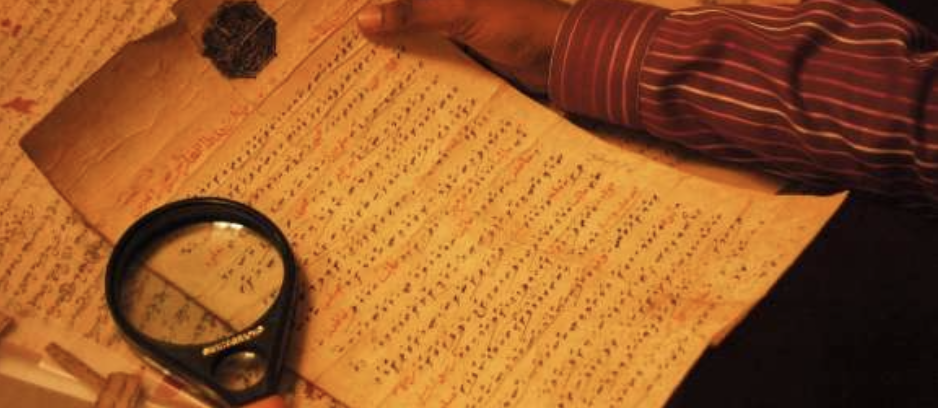
While oral and signal-based communication dominated, the Maldives also has a tradition of written records, though less common than the spoken or visual forms.
Community meetings and shared knowledge
Some of the most important communication happened when people physically came together.
Community meetings and religious gatherings were essential moments for sharing information. Important announcements, decisions, and warnings were often communicated during these gatherings, particularly when the entire community was present in one place. Eid prayers, public ceremonies, and council meetings all served as occasions when leaders could address everyone at once, where decisions could be made collectively, and where shared understanding could be established.

This communal dimension of risk communication is something the modern system, with all its technological reach, sometimes struggles to recreate. A Viber notification reaches a phone. A community gathering reaches a community. The two are not the same.
What we've kept, and what we've left behind
Today, most of the traditional methods described here have been replaced by modern channels. Smoke signals have given way to satellite imagery. Drums have given way to push notifications. Trader networks carrying news between islands have given way to instant messaging across atolls. Internet penetration in the Maldives reached 83.9% in 2024 - a level of digital connectivity that would have been unimaginable to the seafarers who first read swells and stars to find their way home.
In many ways, this is progress. Modern systems are faster, broader, and more precise. A storm forming over the Indian Ocean today is detected, modeled, and broadcast within hours. The kind of warning that once took days to travel between atolls now arrives in seconds.
But something is also worth preserving from the older systems. They were community-based built around shared knowledge, trusted voices, and physical presence. They were inclusive in ways modern channels sometimes are not, a bonfire on a beach is visible to everyone, regardless of literacy, age, internet access, or disability. And they were rooted in deep environmental observation - generations of attention to the patterns of sea, sky, and season.
The country's most effective approach to risk communication may, in the end, be one that draws on both. The reach and precision of modern systems. The trust, inclusion, and rootedness of the older ones.
About this Article
This article draws on Chapter 4.3, Traditional Knowledge and Risk Communication, from Early Warning and Risk Communication in the Maldives, published by the National Disaster Management Authority (NDMA) in 2024 with support from the United Nations Office for Disaster Risk Reduction (UNDRR), under the Climate Risk and Early Warning Systems (CREWS) initiative.