The Maldives doesn't have a "hot season." It's warm and humid all year round, and the heat is getting stronger. What once felt like a particularly hot afternoon is starting to feel like the norm.
Impact's of heat is a quiet . It doesn't escalate like a storm or burn like a fire, it builds slowly through dehydration, fatigue, and dizziness. The people most at risk are children, the elderly, pregnant women, people with chronic illnesses, and anyone who works outdoors.
Where heat hits hardest
At home
Heat builds up fast in poorly ventilated rooms and upper floors of densely-packed buildings.
Outdoors and at work
Fishermen, construction workers, harbour and boat crews or anyone working in the sun face real risk.
For those most at risk
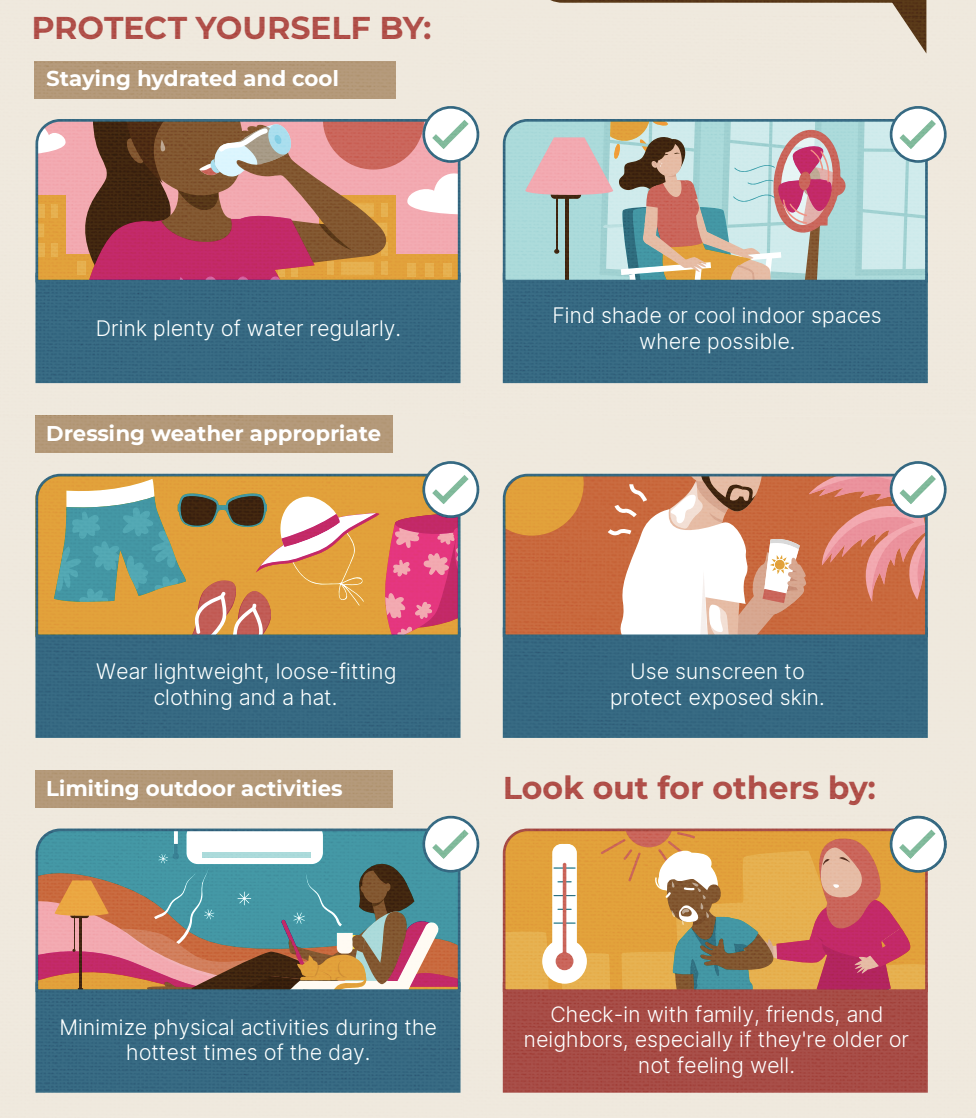
Check on elderly neighbours on hot days, especially if they live alone.
Watch children carefully — they may not say they're tired or thirsty until they're already unwell.
Pregnant women should rest more often and drink more than usual.
People on regular medication should ask their doctor whether the heat affects how it works.
Being ready
Being ready for the heat is mostly about small habits. A few small things in the right places, a few habits that fit easily into the day, and a quiet eye on the people around you, that's most of what staying safe in the heat takes.
What to keep at home
Adjusting your day
Looking out for each other
Heat illness often hits people who don't realize they're in trouble.
Visit elderly neighbors on hot days. A short check-in costs nothing.
Schools, workplaces, and mosques can keep cold water available during heat spells.
If you see someone confused or dizzy in the heat, don't assume they're fine. Get them into shade and start cooling them down.
If heat illness strikes
Catching heat illness early is the difference between a quick recovery and an emergency.
Heat exhaustion
Look for heavy sweating, pale or clammy skin, dizziness, nausea, headache, or muscle cramps.
What to do
Move them out of the sun into a cool space.
Have them lie down and loosen tight clothing.
Cool the skin with a damp cloth or fan.
Give small sips of cool water or ORS,
Stay with them. If they don't recover within 30 minutes, get medical help.
Heatstroke
Look for very hot red skin, body temperature above 40°C, confusion or slurred speech, a fast pulse, or loss of consciousness. This is a medical emergency.
What to do
Get help immediately. Call your nearest hospital or health centre
Move them to the coolest place you can find.
Cool them fast — soak their clothes in water, fan them, place cool wet cloths on the neck, armpits, and groin.
Do not give them anything to drink if they're confused or unconscious.
Stay with them until help arrives.