Chemical Hazards - Cooking Gas and Industrial Explosions
Cooking gas explosions and industrial explosions are serious chemical hazards in the Maldives. Learn what causes them, how they affect communities, and the practical steps every household and business can take to prevent them.
The Maldives imports almost everything it uses. Fuels, industrial chemicals, fertilisers, cleaning agents, and cooking gas all arrive by sea and are stored, handled, and distributed across islands that were never designed as industrial centres.
The concentration of hazardous materials in limited spaces— particularly in Thilafushi, the industrial island west of Malé means that a single incident can have consequences far beyond its immediate location. Dense urban settlements like Malé, where buildings sit closely together and emergency access is limited, amplify the risk further. When something goes wrong with a chemical or gas source in these environments, the margin for error is very small.
What are Chemical Hazards?
Chemical hazards are characterized by their sources, pathways, and potential impacts on human health and the environment. They are associated with potential and significant damage arising from toxic, flammable, corrosive, or highly reactive substances. In the Maldives, chemical hazards impose significant risks across human, social, economic, and environmental domains. Limited local capacity for the containment and disposal of chemicals only compounds these risks.
Cooking Gas Explosions
Cooking gas explosions refer to incidents in residential and commercial occupancies involving the vapour cloud ignition of Liquefied Petroleum Gas (LPG), resulting in an explosion outside its containing cylinder or vessel. These cause severe injuries and fatalities, or extensive structural damage through blast pressure and thermal effects.
Every kitchen in the Maldives runs on LPG. There is no domestic gas supply network. Cooking gas arrives as imported cylinders nearly 17,500 tonnes was imported in 2022 alone. Those cylinders are stored in homes, restaurants, cafés, and commercial kitchens across every inhabited island.
Cooking gas explosions have no predictable pattern. They happen randomly, as isolated incidents, triggered by human error, improper handling, regulator malfunction, or undetected gas leaks. On densely built islands where homes and businesses share walls and narrow lanes, the consequences of a single explosion can cascade rapidly. Blast overpressure and fire spread to adjacent buildings. Households are displaced. Businesses close. And in the most serious incidents, people are killed.
The risks are heightened by chronically low awareness of safe gas handling practices among the general public, the general absence of fire safety equipment in residential homes, and the limited enforcement powers available to fire safety authorities. These are not new gaps — they are persistent ones.
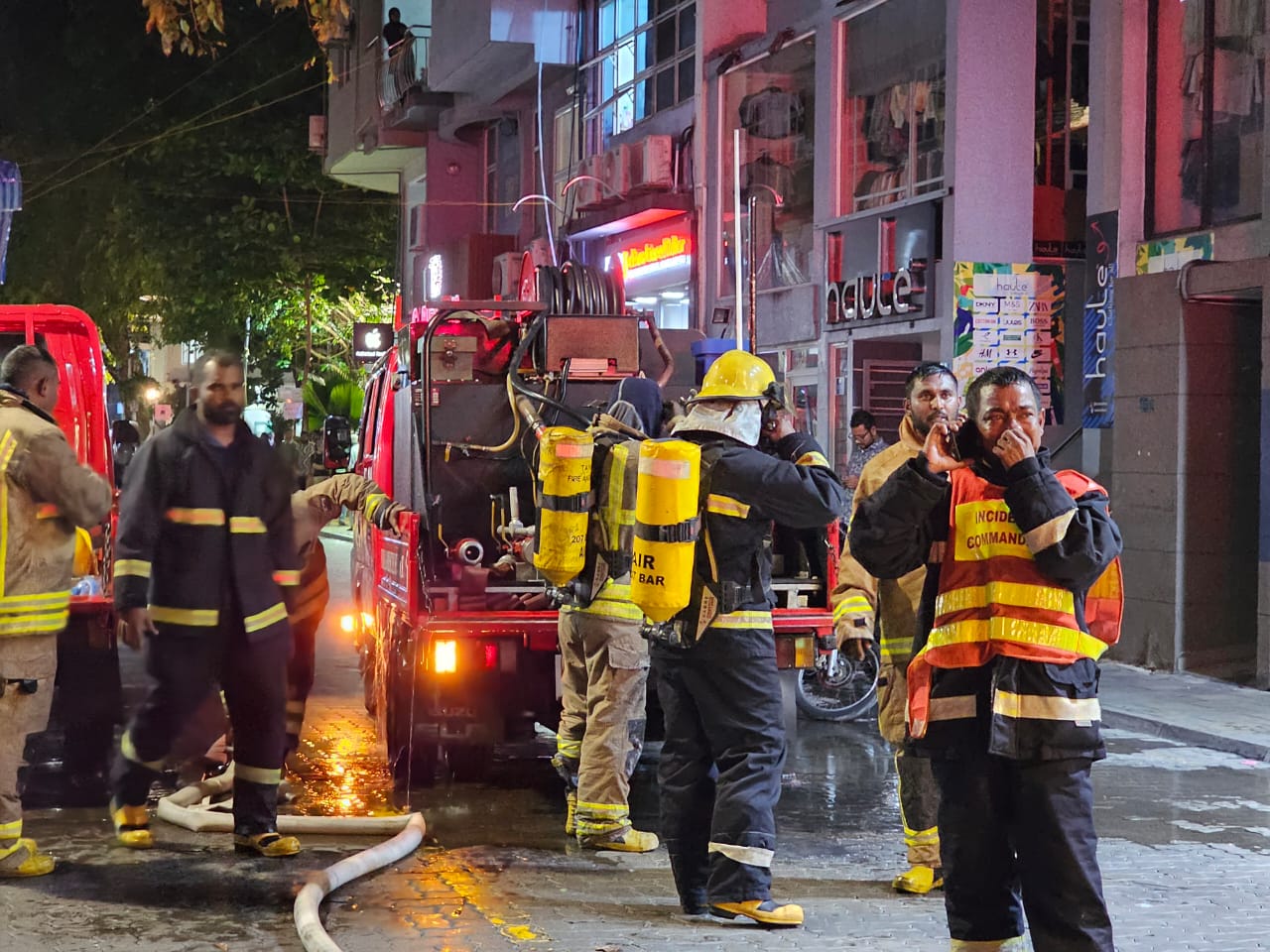
MNDF Fire and Rescue Services responding to Fire incident in Male' City. Photo Source: National Disaster Management Authority
Industrial Explosions
Industrial explosions refer to incidents involving the rapid conversion of potential mechanical or chemical energy into kinetic energy, causing severe injuries or fatalities and extensive structural damage through blast pressure, thermal effects, seismic effects, and shrapnel fragmentation. This covers explosions involving domestic and industrial chemicals and processes, excluding military-grade explosives and domestic LPG cooking incidents.
Industrial explosions are infrequent but when they happen, they are serious.
In 2013, a gas explosion in the engine room of a boat docked in Thilafushi seriously injured a foreign worker.
In 2014, an airbag explosion during docking work resulted in a fatality.
In 2023, two gas cylinders exploded during a welding accident in Haa Dhaalu Makunudhoo, claiming two lives.
These incidents share a common thread low awareness levels among workers, inadequate fire safety equipment in industrial spaces, and persistent gaps in the enforcement of safety standards. The concentration of industrial activity and chemical storage in Thilafushi and parts of Malé means that the potential for cascading damage from one facility to neighbouring structures and supply chains is real. A large-scale industrial explosion can trigger fires, damage nearby infrastructure, displace workers, and disrupt the fuel and chemical supply chains the country depends on.
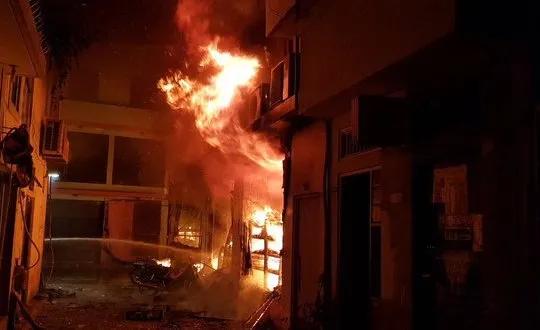
Warehouse caught on fire | Photo: Maldives Independent
How These Hazards Affect Our Communities
Lives and homes at immediate risk
Both cooking gas and industrial explosions can cause fatalities and serious injuries with little or no warning. Households can be displaced overnight. Businesses can be destroyed entirely.
Public health consequences
Industrial explosions involving toxic chemicals, fertilizers, solvents, industrial gases release harmful substances into the air that spread across entire islands.
Disruption of Supply chains and essential services
Industrial facilities in Thilafushi handle fuel, gas, and materials that supply the entire Greater Malé region and beyond. An explosion that damages or shuts down these facilities creates immediate knock-on effects for fuel availability, LPG supply, and the supply chains that smaller islands depend on.
Economic & Psychological Impacts
Property damage, temporary business closure, displacement of households, and the long-term psychological impact on survivors and affected communities all contribute to costs that extend well beyond the immediate incident.
How You Can Prevent and Prepare
Most cooking gas and industrial accidents are preventable. Prevention starts with awareness and awareness starts at home and at work.
Inspect Your Gas Cylinder and Regulator Regularly Check your gas cylinder, hose, and regulator for wear, damage, or leaks before each use. A simple soap-and-water test on connections will reveal gas leaks as bubbles. Never ignore the smell of gas in your home.
✓
Ventilate Your Kitchen Always ensure your kitchen is well-ventilated when using gas. Avoid use gas appliances in enclosed spaces. Gas accumulates in enclosed areas a spark from any source can ignite it.
Store Cylinders Safely Store LPG cylinders upright, in a cool and well-ventilated space away from heat sources, open flames, and direct sunlight. Never store spare cylinders indoors or in enclosed storage.
Know What to Do If You Smell Gas If you smell gas, do not turn any switches on or off. Do not use your phone inside the space. Open windows and doors immediately. Leave the building and call for help from outside. Do not re-enter until the area has been cleared.
✓
Keep a Fire Extinguisher at Home Every household and business should have a fire extinguisher and everyone in the household should know how to use it. Check it is in working order regularly. A functional extinguisher in the first minutes of a fire can prevent it from becoming a disaster.
✓
Follow Safety Protocols at Work Workers in industrial settings especially those handling chemicals, fuels, or gas should follow all established safety protocols without exception. Attend training. Use protective equipment. Report unsafe conditions. Do not proceed with work if safety standards are not in place.
Report Unsafe Storage or Handling If you observe unsafe chemical or gas storage in your building, workplace, or neighborhood cylinders stored near heat sources, improperly maintained equipment, chemical storage in residential areas report it to your island council or the MNDF Fire and Rescue Services.
✓
Support Fire Safety in Your Building Advocate for fire safety equipment — extinguishers, smoke detectors, clear evacuation routes in your building. In commercial and residential buildings, these measures are not optional extras. They are the difference between a contained incident and a catastrophe.
Knowing how to handle gas safely, knowing what to do when something goes wrong, and speaking up about unsafe conditions, these are the most powerful tools any community has against chemical hazards.
The MNDF Fire and Rescue Services operate under regulatory oversight of safe handling, use, and storage of liquid hydrocarbons and hazardous materials, with fire safety permits issued to enterprises and trained first responders positioned in key locations.
Explore video guides on fire prevention
How to use a fire extinguisher
How to use a fire extinguisher
Knowing how to use a fire extinguisher correctly can save lives and prevent small fires from turning into major disasters. Remember: Safety comes first — if a fire is too large or spreading rapidly, evacuate immediately and call the FRS hotline 118
Preventing Gas Leaks
Preventing Gas Leaks
Gas leaks can happen anywhere — at home, in restaurants, or in workplaces — and even a small leak can quickly turn dangerous if not handled properly. Learn simple and effective steps to detect, prevent, and respond to gas leaks safely.
Home Fire Safety
Home Fire Safety
Most home fires start small and can often be prevented with simple precautions. Every household can take to reduce fire risks, from safe cooking and electrical use to keeping fire extinguishers and smoke alarms ready.
Kitchen Fire Safety
Kitchen Fire Safety
The kitchen is one of the most common places where fires begin, but most can be prevented with a few simple habits. This video explains how to cook safely and react quickly if a fire starts.